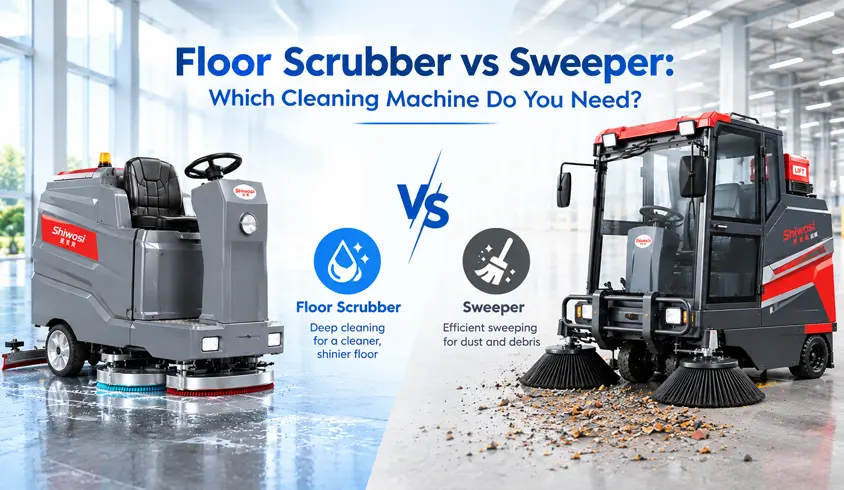

Walk-behind and ride-on scrubbers use the same basic wash, agitation and recovery process, but they fit different workflows. The right choice depends on usable cleaning area, access, operator time and the number of interruptions during a shift.
Where walk-behind scrubbers work best
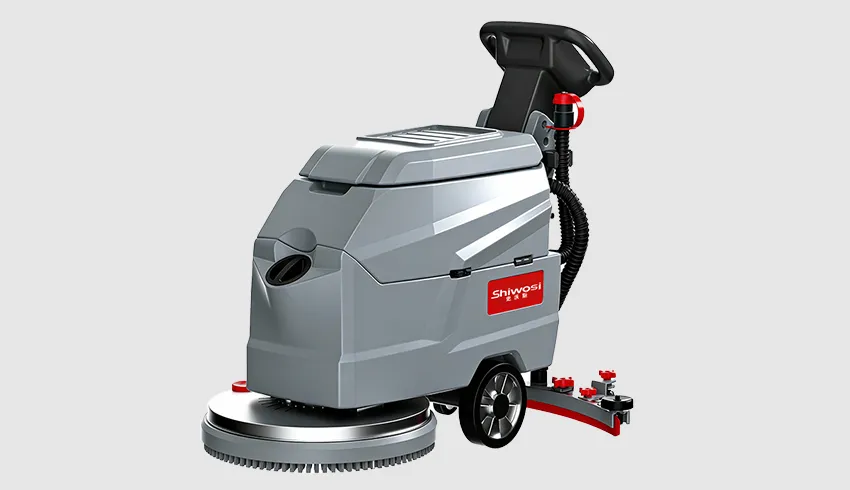
Walk-behind machines are easier to position in narrow aisles, small rooms, elevators and areas with frequent obstacles. They are commonly selected where cleaning is divided into short routes or where the machine must be moved between floors.
Compact storage and transport
Closer control around shelving and fixtures
Suitable for smaller or interrupted cleaning zones
Lower operator visibility and productivity than a ride-on machine on long open routes
Where ride-on scrubbers work best
Ride-on scrubbers reduce walking effort and can cover broad open floors more consistently. They are useful for warehouses, factories, airports, shopping centers and parking facilities where operators clean for several hours and long travel distances are unavoidable.
Higher practical output on open floors
Larger solution and recovery capacity
Reduced operator walking fatigue
Requires more turning, storage and transport space
Do not select by square meters alone
A large building can still favor a compact machine if racks, displays or production equipment divide the floor into narrow sections. Conversely, a moderate open area cleaned several times per day may justify a ride-on model. Measure the narrowest working aisle, door width, elevator capacity and turning points before comparing machines.
Separate total building area from cleanable floor area
Include travel between cleaning zones
Estimate refill, drain and battery interruptions
Consider ramps and maximum approved gradient
Compare whole-shift productivity
Theoretical productivity is working width multiplied by travel speed. Real productivity is lower because operators turn, overlap passes, refill solution, empty recovery tanks and respond to traffic. Ask for a realistic range for your layout rather than choosing from a single maximum figure.
Check tank capacity against route length
Confirm runtime under the proposed battery setup
Review squeegee width and water recovery
Plan charging, ventilation and battery maintenance
A simple decision rule
Start with a walk-behind model when access and maneuverability are the main constraints. Start with a ride-on model when labor time, long routes and open-floor productivity dominate. For mixed facilities, two smaller machines can sometimes provide better coverage and backup than one oversized unit.
Selection note: Final machine specifications, accessories and conformity documents should be confirmed for the selected model and destination before ordering.