
Industrial vacuum selection should begin with the material and collection task, not motor power alone. Fine dust, metal chips, liquids and continuous extraction place different demands on airflow, vacuum level, filtration and container design.
Describe the material first
Record particle size, density, temperature, moisture and whether the material is hazardous, combustible, corrosive or sharp. A machine suitable for ordinary workshop debris may be inappropriate for fine hazardous dust or a classified area.
Fine dust or coarse solids
Metal chips, abrasive particles or fibers
Water, coolant, oil or mixed wet material
Hazardous or combustible dust requiring specialist assessment
Understand airflow and vacuum
Airflow carries material through the hose, while vacuum pressure helps overcome resistance and lift dense material. Long hoses, small hose diameters, filters and bends increase resistance. Ask the supplier to consider the complete collection path rather than quoting motor power as the main performance measure.
Required pickup distance and vertical lift
Hose diameter, length and number of bends
Density and volume of collected material
Connection to tools or production equipment
Choose filtration for the risk
Filter area, efficiency and cleaning method affect sustained performance. Fine dust can blind a small filter quickly even when initial suction is strong. Confirm the filter class, sealing arrangement, disposal method and whether local regulations require tested equipment.
Filter efficiency and applicable test standard
Manual, pulse or automatic filter cleaning
Safe filter replacement and dust disposal
Differential pressure or blockage indication
Match the collection and duty cycle
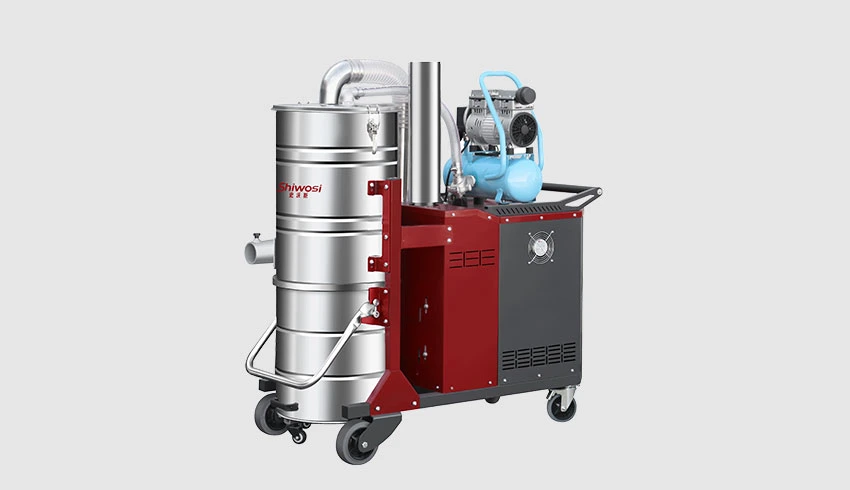
A removable tank is convenient for general cleanup, while continuous bags can reduce dust release during disposal. Dual-container designs separate filtration and waste handling. Continuous production extraction may require a side-channel blower, pneumatic source or another configuration rated for the intended duty.
Intermittent cleanup or continuous operation
Expected material volume per shift
Lift, tip, bag or removable-bin disposal
Available single-phase, three-phase, battery or compressed-air supply
Build a complete request for quotation
Send a material safety data sheet when relevant, plus photographs, collection rate, hose route, working hours, voltage and area classification. Request confirmation of included filters, hoses, tools, electrical components, documentation and recommended spares.
Selection note: Final machine specifications, accessories and conformity documents should be confirmed for the selected model and destination before ordering.